We create environmental benefits
Our production plants use resources so efficiently that only socially useful products leave the steel company sites.
More information about:

Forestry machine from Gremo AB, manufactured of high strength steel from SSAB. Such steel enables a 15 per cent reduction in the chassis weight. This results in lower fuel consumption in relation to payload. In addition, the terrain driving characteristics are improved. Photo: SSAB.
The third commitment in the steel industry’s shared vision for 2050, Steel shapes a better future (jernkontoret.se) relates to creating environmental benefit. Nothing but products of value to society shall leave our companies.
The iron and steel industry is working to cut its environmental and climate impact, at the same time as the products themselves contribute to a more sustainable society.
To bring about sustainable development, it is necessary for the economic, social and ecological interests to be interlinked. For this reason, the steel industry works to cut emissions, maintain biodiversity and essential services provided by ecosystems while utilising natural resources as efficiently as possible. The goal is to develop products that have a long service life, that can be recycled and that contribute to the development of the environmental technology of the future.
Read more about ecosystem services and biodiversity (jernkontoret.se)
Serving the environment through the whole life cycle
A steel’s environmental impact needs to be evaluated by looking at the product’s whole life cycle – from the raw materials, through the production process and use of steel in products, to recycling and remelting to make new steel. All transport journeys, from the raw material inputs up to and including the recycling, need to be included too.
When a steel grade has high strength and long service life then less material is used, at the same time as the product itself lasts longer. This means less consumption of resources which contributes to less environmental and climate impact over the life of the product.
More durable steel delivers lower climate change effect
The strength of a steel determines how much load it can withstand. The higher the strength, the lower the material requirement to achieve the same function or support a given load.
Where the strength is doubled the weight of the steel structure is cut by about 30 per cent, compared with a construction of conventional (ordinary) steel.
Lightweight constructions lead to a smaller environmental footprint, for example in terms of lower emissions – both when the steel is manufactured and when transported. It is also translated into more energy-efficient end-products and a more sparing use of natural resources. In vehicles, lighter weight can reduce fuel consumption without affecting safety.
Sustainable products
- Swedish steel companies develop products that contribute to:
- more efficient transportation
- lower energy consumption
- reduced carbon dioxide emissions
- longer product life
- high recyclability
Several companies are busy developing solutions for maximising energy efficiency, carbon-free fuels and transportation that prioritise the needs of both people and nature.
Steel is 100 per cent recyclable
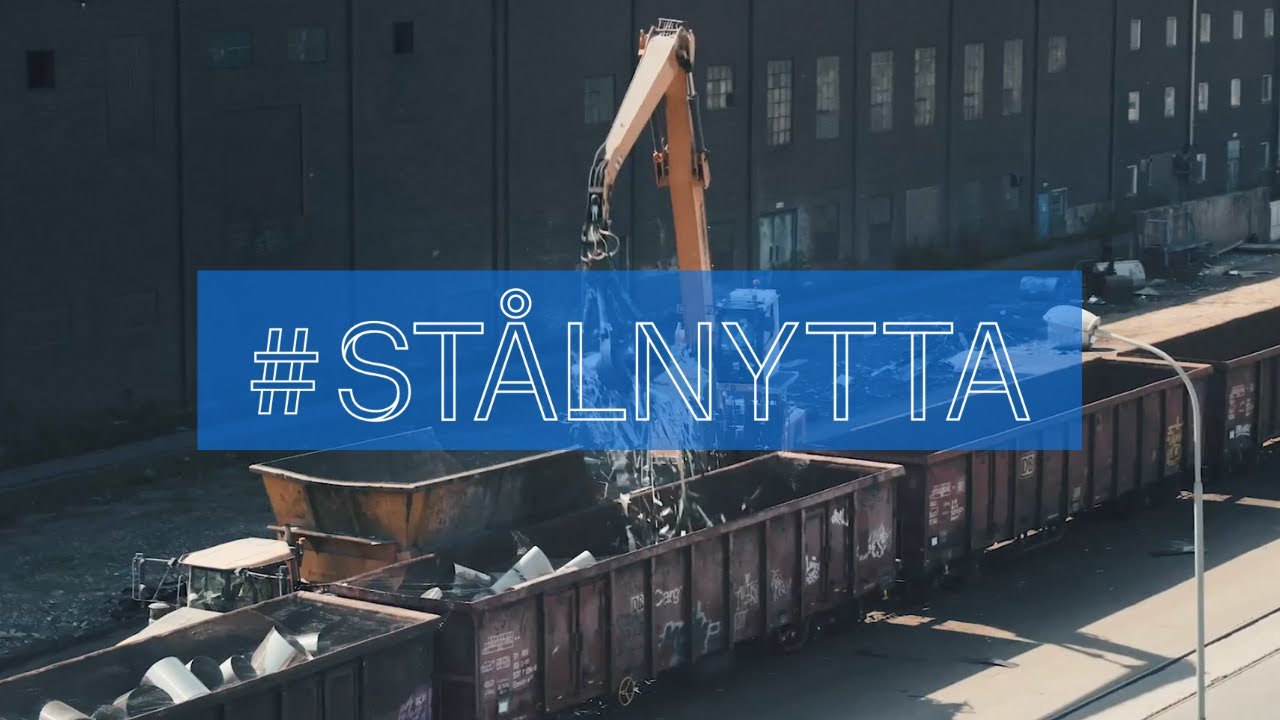
The steel industry has long and proven experience that has made circular manufacturing a core strategy. Iron atoms do not degrade or disappear. They do not lose their quality regardless of how many times they are remelted. Metal scrap is thus an essential raw material when new steel is produced.
To watch this video you need to accept marketing cookies, since the video is played via YouTube.